

The History of Witchcraft
Where It Began, Why It Was Feared, and How It Transformed
Witchcraft did not begin as something hidden, forbidden, or feared. In its earliest forms, what we now call witchcraft was simply part of everyday life. It was how people understood the world, cared for their communities, and made sense of forces they could not yet explain.
Long before the word Witch existed, humans practiced forms of magic through observation, ritual, and their relationship with nature. Early people noticed patterns in the seasons, the moon, plants, animals, and weather. They learned which herbs healed and which harmed, and they used this knowledge intentionally. Stories were told to explain birth, death, illness, love, and loss. These practices were not separate from life. They were life itself.
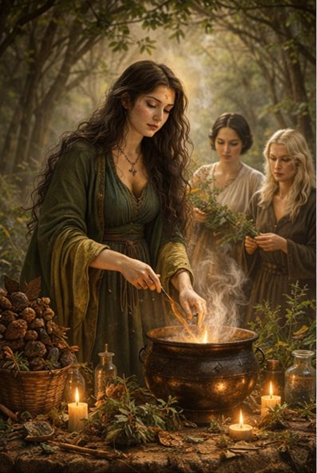
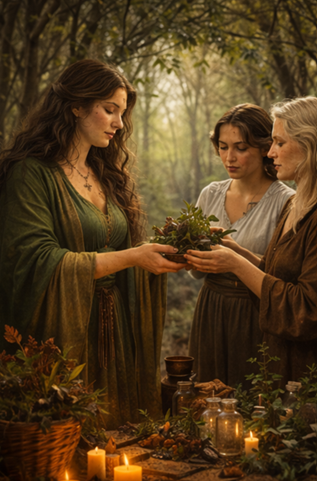
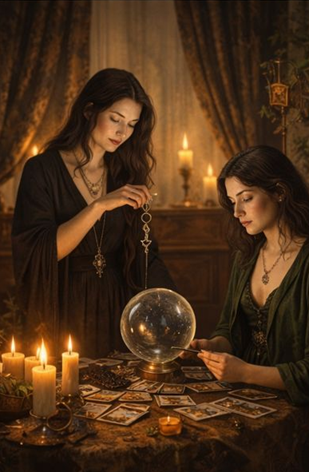
In ancient societies, spiritual knowledge was often held by healers, midwives, herbalists, seers, and ritual leaders. These individuals were respected because they understood the land, the human body, and the unseen aspects of existence. Magic was not considered supernatural. It was simply knowledge gained through observation, experience, and tradition.
Across many cultures, people practiced rituals to honor the cycles of nature and the spirits or gods they believed shaped their lives. In Mesopotamia, Egypt, Greece, and Rome, magic and religion were deeply intertwined. Spells, prayers, amulets, and offerings were part of daily spiritual practice. In Northern Europe, pagan traditions honored the land, ancestors, and seasonal cycles. In many Indigenous cultures, spiritual practices were essential to community balance, survival, and continuity.
There was no clear division between religion, medicine, and magic. These roles often overlapped. A healer might also serve as a spiritual guide. A midwife might perform protective rituals over a pregnant woman. A farmer might bless the land before planting. None of this was considered strange or dangerous. It was simply how life was understood.
The fear of witchcraft did not arise because magic suddenly appeared. It arose as power structures shifted and as societies faced events they could not explain with the knowledge available at the time.
As organized religions expanded, particularly Christianity in Europe, belief systems became increasingly centralized and controlled. Practices rooted in nature, observation, and personal interpretation began to be viewed with suspicion. Those who believed that natural objects held meaning, and that specific items or actions could influence outcomes, and practiced outside institutional authority.
Witchcraft became threatening not because it was harmful, but because it existed outside of the Church’s authority and control.
Many of those labeled as Witches were women. They were often healers, widows, midwives, or individuals who lived independently. They carried knowledge passed down through generations, particularly knowledge of herbs, childbirth, and folk remedies. In societies that increasingly sought control over bodies, land, and belief, this independence and knowledge became dangerous.
Fear was intensified by uncertainty. Illness, famine, natural disasters, and death were common, and people searched for explanations. When communities suffered, blame was often placed on individuals who were already viewed as different or outside social norms. Witches became convenient scapegoats for events that had no clear cause.
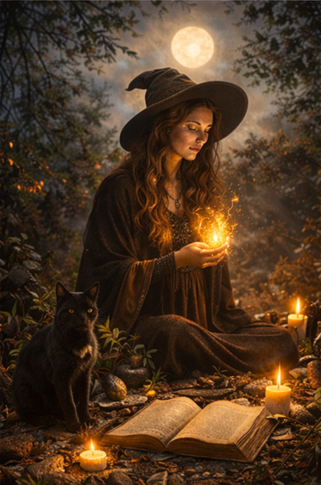
Many women who lived alone kept cats, which served as companions and helped control rodent populations. During outbreaks of disease such as the plague, these women were sometimes affected less severely. The plague was spread primarily by fleas carried by rodents, which were more common in densely populated or unsanitary areas. At the time, this connection was not understood. Instead, fear grew, and witches were blamed not only for illness, but also for seeming resistant to it.
A simple explanation now, once caused fear in our ancient ancestors.
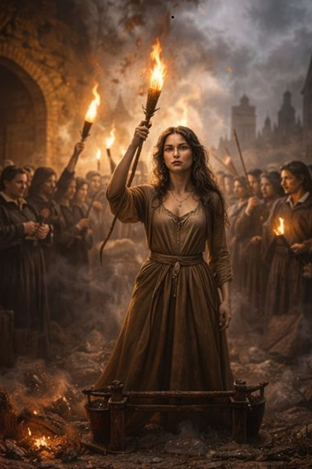
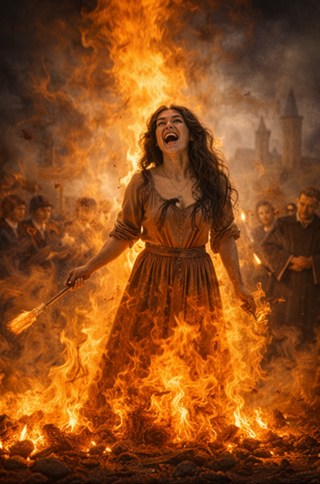
During the witch trials in Europe and later in colonial America, thousands of people, the majority of them women, were accused, imprisoned, tortured, and executed. Most were not practicing witches in the modern sense. Many had committed no crime at all. Accusations were often driven by fear, jealousy, land disputes, social tension, or personal grudges.
The image of the witch as an evil figure was shaped during this time. Stories of harmful magic and pacts with dark forces were created and spread to justify persecution. These stories were not reflections of actual practices. They were tools used to enforce control and justify violence.
As time passed, witchcraft did not disappear. Instead, it went underground. Folk practices continued quietly within families and communities. Herbal knowledge survived. Rituals were hidden within cultural traditions. Magic became something whispered rather than spoken openly.
In the modern era, particularly during the twentieth century, witchcraft began to reemerge into public awareness. Scholars, spiritual seekers, and practitioners started reclaiming older traditions and interpreting them through contemporary understanding.
Wicca, modern paganism, and other forms of contemporary witchcraft developed during this period. These paths often emphasized personal spirituality, connection to nature, ethical practice, and individual responsibility. For many, witchcraft became a way to reconnect with intuition, empowerment, and spiritual autonomy.
Modern witchcraft is not a single tradition or belief system. It is a broad and diverse collection of practices. Some witches follow structured paths, while others practice intuitively. Some work with deities, while others do not. Some focus on ritual, while others focus on daily mindfulness and intentional living.
What unites many modern practitioners is not belief in superstition, but an emphasis on awareness, choice, and relationship with the world around them, along with an understanding that everything is connected in some way.
Today, witchcraft is no longer primarily about secrecy or fear. It has become a path of self exploration, healing, and conscious living. Many people are drawn to it as a way to reclaim personal power, honor cycles of change, and move through life with greater awareness.
It is important to understand that witchcraft has always evolved. It adapts to time, culture, and the individual. It is not frozen in the past. It is a living practice.
The fear that once surrounded witches tells us more about history than it does about magic. Witchcraft was feared because it encouraged independence of thought and practice, making it difficult to control those who followed it. It taught people to trust their own knowledge, experience, and connection to the world.
That remains true today.
To study witchcraft is not to step into something dark or dangerous. It is to step into a long human tradition of curiosity, observation, and meaning making. It is a practice of listening rather than demanding, and of intention rather than force.
As you move forward in your learning, remember that witchcraft does not require belief in anything you cannot accept. It allows space for you to build understanding in a way that makes sense to you. It does not require devotion to a specific tradition or identity. It begins with intention, awareness, and choice.
The history of witchcraft is not only a story of persecution. It is a story of resilience, adaptation, and return. It reminds us that knowledge can survive even when silenced, waiting patiently until people are ready to listen again.
This is where understanding begins. Not with fear, but with context. Not with rules, but with curiosity. Not with certainty, but with awareness.
Reflection
Take a moment to consider what drew you to this path. Not what you think you should believe or become, but what feels meaningful and honest to you right now.
These reflections are optional. Answer any questions that feel comfortable, and skip anything that does not resonate.