

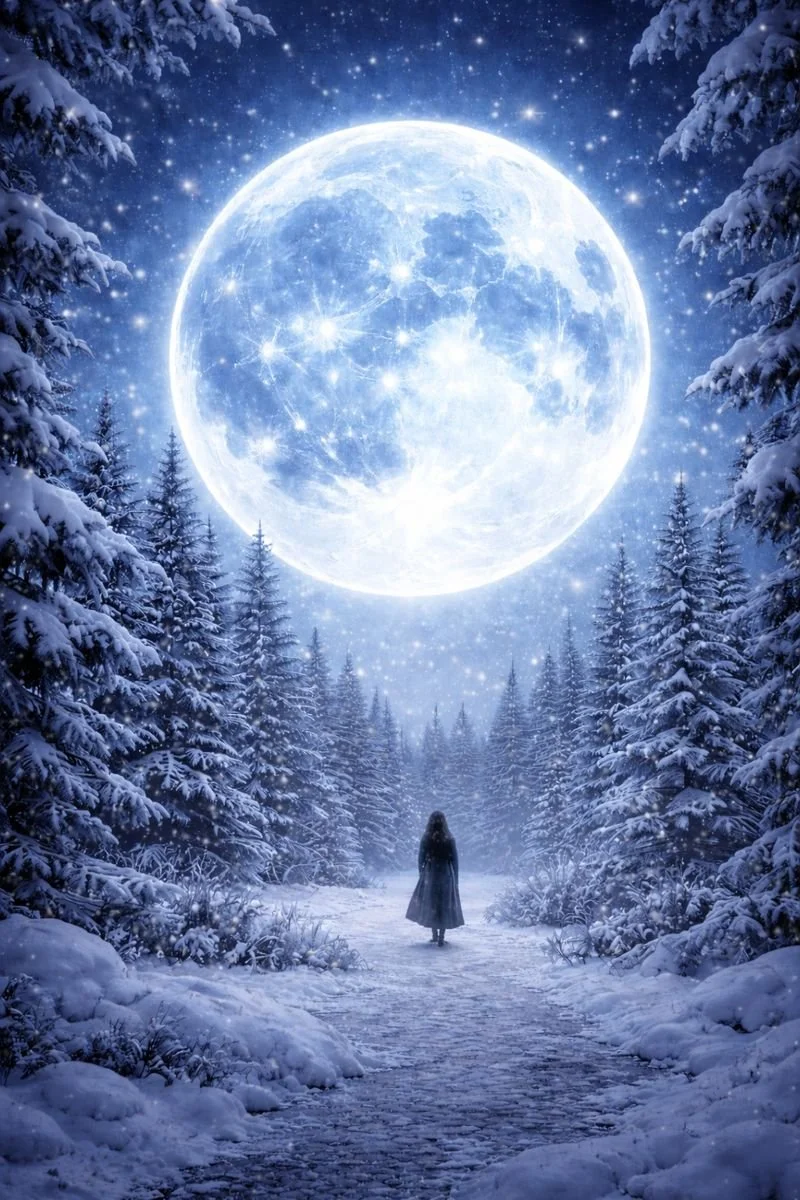
Snow Moon
The Snow Moon is the full moon that rises during the heart of winter, most often in February, when the land is still wrapped in cold and the world feels hushed beneath layers of snow. Its name comes from the heavy snowfall that traditionally blankets much of the northern hemisphere during this time. While other full moons may carry feelings of expansion or outward motion, the Snow Moon is deeply inward, reflective, and enduring. It speaks to survival, patience, and quiet strength in the face of lingering winter.
Historically, the Snow Moon was named by Indigenous and early agrarian cultures who closely observed the rhythms of the land. February was often the harshest and most unforgiving month of winter. Food stores ran low, travel became difficult, and the cold could feel relentless. The Snow Moon marked a time when endurance mattered more than abundance. It reminded communities that survival itself was an act of strength and wisdom. The snow that covered the earth was both a challenge and a protection, insulating seeds and roots beneath the surface while appearing lifeless above.
In many traditions, this moon was also associated with hunger and scarcity, sometimes referred to as the time when hunting was difficult and resources were stretched thin. Yet within that hardship lived an important lesson. The Snow Moon did not represent punishment or loss. It represented resilience. It honored the ability to endure, to conserve energy, and to trust that what lay hidden beneath the snow was still alive and waiting for its moment to return.
The Snow Moon is the full moon that rises during the heart of winter, most often in February, when the land is still wrapped in cold and the world feels hushed beneath layers of snow. Its name comes from the heavy snowfall that traditionally blankets much of the northern hemisphere during this time. While other full moons may carry feelings of expansion or outward motion, the Snow Moon is deeply inward, reflective, and enduring. It speaks to survival, patience, and quiet strength in the face of lingering winter.
Historically, the Snow Moon was named by Indigenous and early agrarian cultures who closely observed the rhythms of the land. February was often the harshest and most unforgiving month of winter. Food stores ran low, travel became difficult, and the cold could feel relentless. The Snow Moon marked a time when endurance mattered more than abundance. It reminded communities that survival itself was an act of strength and wisdom. The snow that covered the earth was both a challenge and a protection, insulating seeds and roots beneath the surface while appearing lifeless above.
In many traditions, this moon was also associated with hunger and scarcity, sometimes referred to as the time when hunting was difficult and resources were stretched thin. Yet within that hardship lived an important lesson. The Snow Moon did not represent punishment or loss. It represented resilience. It honored the ability to endure, to conserve energy, and to trust that what lay hidden beneath the snow was still alive and waiting for its moment to return.