

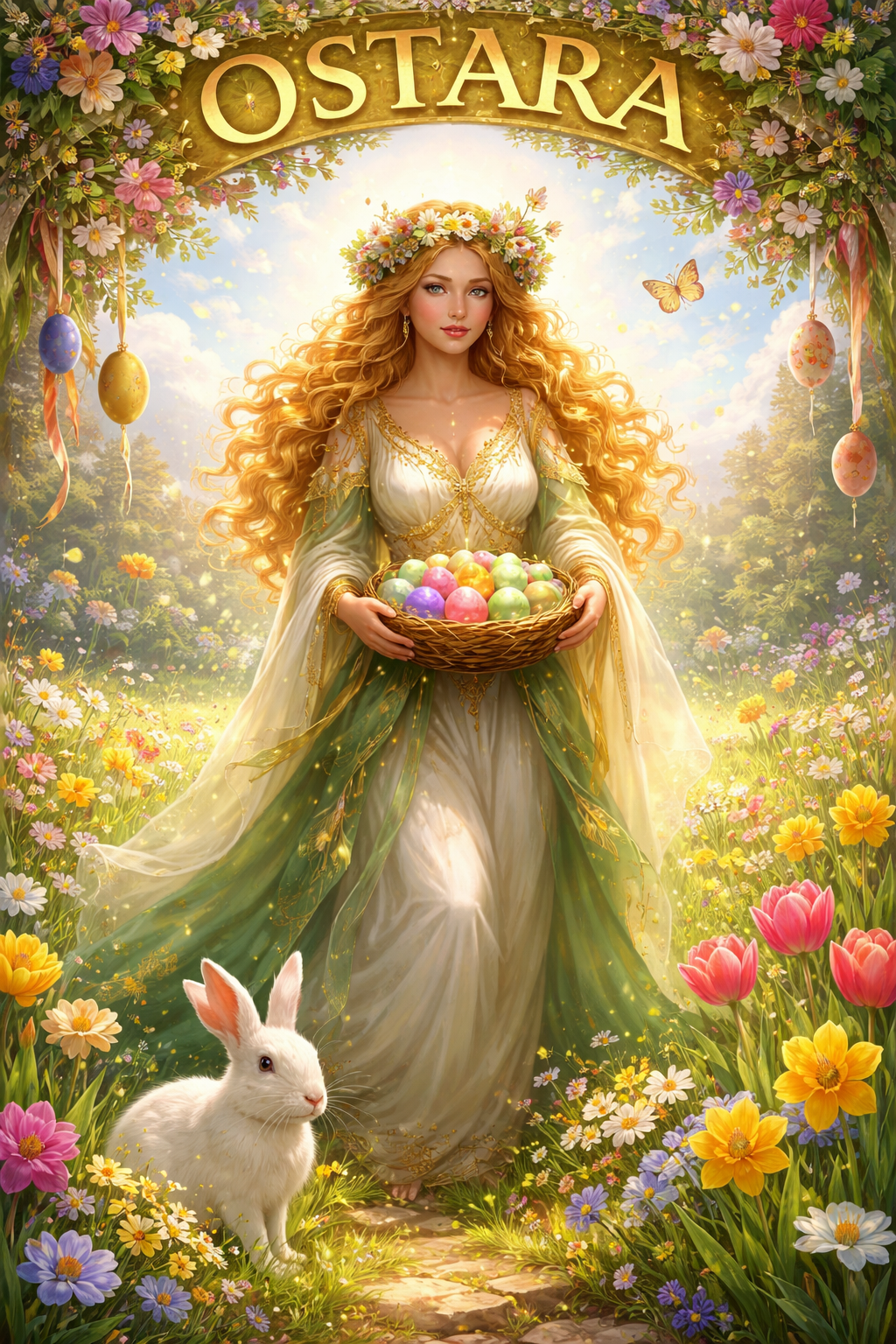
Ostara
Ostara marks the moment of perfect balance in the turning of the Wheel, when day and night stand equal and the world exhales into spring. Celebrated at the spring equinox in late March, Ostara signals the true return of light. Unlike the quiet promise of Imbolc, Ostara brings visible change. Snow recedes, soil softens, and life begins to move with intention. It is a threshold between what was endured and what is now possible.
This festival honors equilibrium between light and dark, rest and motion, intention and action. The long dominance of winter has ended, yet the full abundance of summer has not arrived. Ostara exists in the fertile middle, reminding us that growth requires balance. It is a season of alignment, where energy begins to rise but must still be guided with care. What is nurtured now will shape the months ahead.
The name Ostara is often associated with the Germanic spring Goddess Eostre, a deity linked to dawn, fertility, and renewal. While historical records of her worship are limited, her symbolism remains deeply woven into the season. Dawn itself is sacred at Ostara, as the daily rebirth of light mirrors the rebirth of the earth. This connection to renewal, eggs, and hares reflects ancient understandings of fertility and cyclical return rather than modern celebration.
Agrarian societies viewed Ostara as a time of preparation and mindful action. Fields were assessed, seeds were chosen, and tools were readied. The earth was no longer frozen, but planting required patience and discernment. If done too early the seeds would fail, and if delayed too long the season would be lost. Ostara taught attentiveness to weather, soil, and subtle signs that signaled readiness. Survival depended not on haste, but on harmony with natural rhythms.
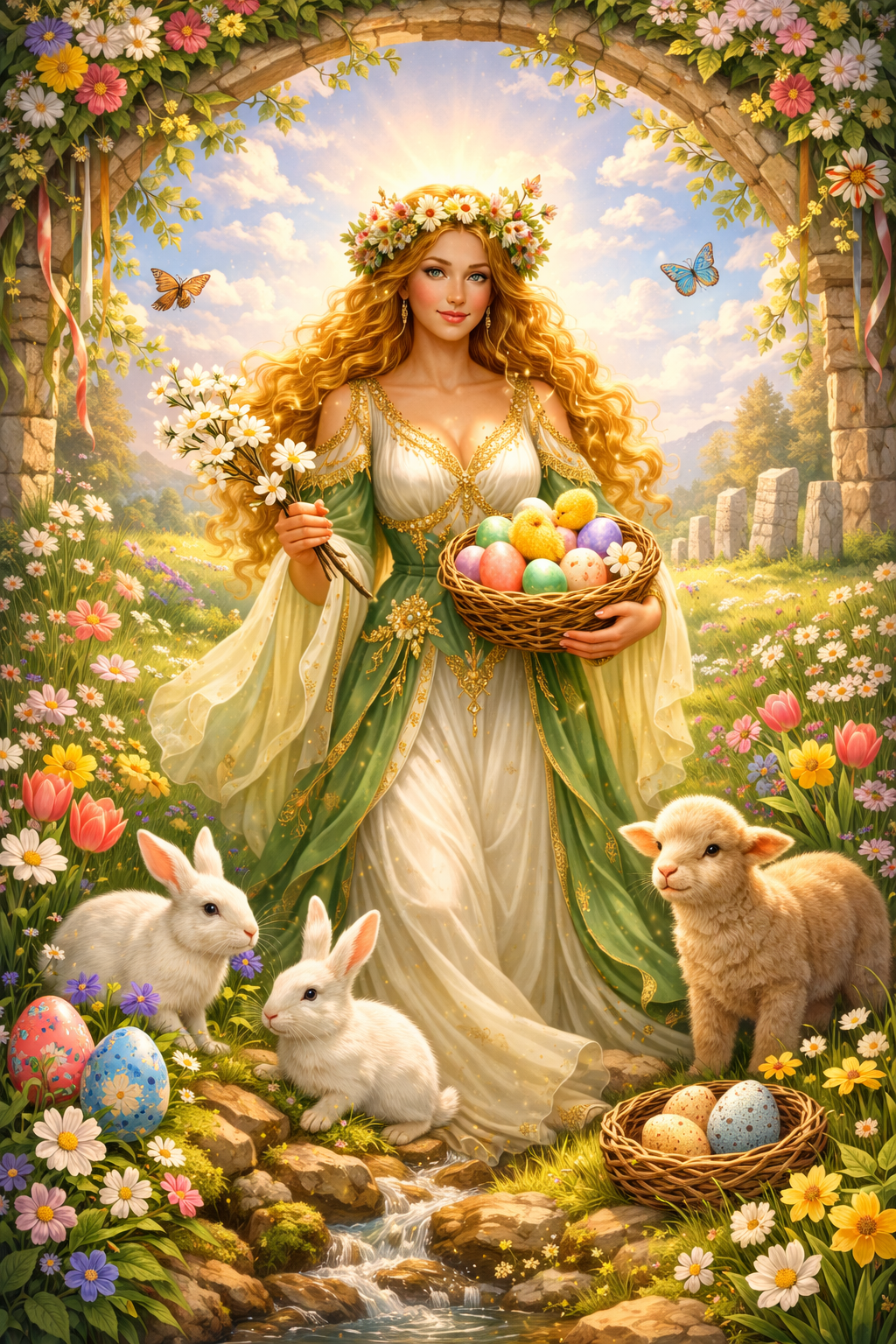
Symbols of Ostara speak clearly of its purpose. Eggs represent potential and creation, holding life unseen yet inevitable. Seeds symbolize commitment, marking the moment when intention becomes tangible. Early flowers emerge as messengers of hope, while hares embody vitality and the quickening pace of life. Together, these symbols remind us that growth is both delicate and resilient
Light plays a central role in Ostara observances. As the sun restores balance, its power becomes equal to the darkness it once yielded to. Candles were lit not in quiet waiting, but in recognition of harmony restored. This was a time to honor clarity, truth, and conscious choice. With longer days ahead, actions taken now would be illuminated rather than hidden. Ostara asks for honesty with the self, with others, and with the path being chosen.
Unlike winter festivals that turn inward or harvest festivals that celebrate abundance, Ostara bridges reflection and movement. Homes were often cleaned not only as an act of purification, but as preparation. Windows were opened, thresholds were swept, and fresh air was welcomed. These practices mirrored the inner work of releasing stagnation and making space for what wished to grow.
Spiritually, Ostara is a time for intentional beginnings. These are not rushed resolutions, but considered commitments. Goals formed during Imbolc now ask to be shaped, refined, and gently set into motion. It is a season of planting both literal and symbolic seeds, including creative projects, healing journeys, relationships, and personal transformations. Ostara teaches that balance is not fixed and must be continually tended.
In magical traditions, Ostara is associated with growth work, balance rituals, fertility magic, and renewal practices. Yet its power lies in moderation. This is not the fiery expansion of Beltane nor the height of Litha. Ostara’s magic is steady, clear, and grounded. It favors consistency over intensity and patience over force.
Across centuries of cultural change, Ostara has endured because its message remains deeply human. It speaks to the need for hope made visible, for effort met with response, and for balance restored after hardship. It reminds us that renewal is not sudden, but earned through attention, care, and trust in cycles larger than ourselves.
Ostara arrives with open hands. It does not promise immediate abundance, only possibility. It asks us to stand in balance, to choose wisely, and to nurture what we wish to see flourish. As light and dark share the sky, we are invited to do the same within ourselves, honoring where we have been while stepping forward with intention into what is becoming.