Imbolc
Imbolc is one of the oldest and most quietly powerful festivals in the seasonal wheel, a threshold moment that marks the slow turning of the year from deep winter toward returning light. Traditionally observed around February 1st or 2nd, Imbolc falls midway between the winter solstice and the spring equinox. While the land in many regions still lies under frost and snow, Imbolc is not about visible abundance. It is about what stirs unseen beneath the surface. It is a festival of promise, renewal, and the first fragile signs of life awakening after winter’s long stillness.
The name Imbolc is believed to derive from Old Irish, often translated as “in the belly,” a reference to pregnant livestock and the swelling potential of life waiting to be born. In agrarian societies, this was a crucial turning point of the year. Stored food was running low, winter sickness was common, and survival depended on careful planning and hope. The first lactation of ewes, the lengthening of daylight, and the subtle softening of the land were signs that life would continue. Imbolc did not celebrate what had already arrived but honored what was coming, even when evidence was scarce.
Historically, Imbolc is rooted deeply in early Celtic culture, particularly in Ireland, Scotland, and parts of Britain. It was closely associated with pastoral life, hearth traditions, and the cycles of fire and fertility. One of the central figures tied to Imbolc is Brigid, an ancient Goddess later syncretized into Christian tradition as Saint Brigid. As a Goddess, Brigid ruled over poetry, healing, smithcraft, and the sacred flame. Her domains reflect Imbolc’s themes perfectly. Poetry and inspiration speak to new ideas forming. Healing aligns with recovery from winter’s toll. Smithcraft symbolizes transformation through fire. The sacred flame represents light returning to the world.
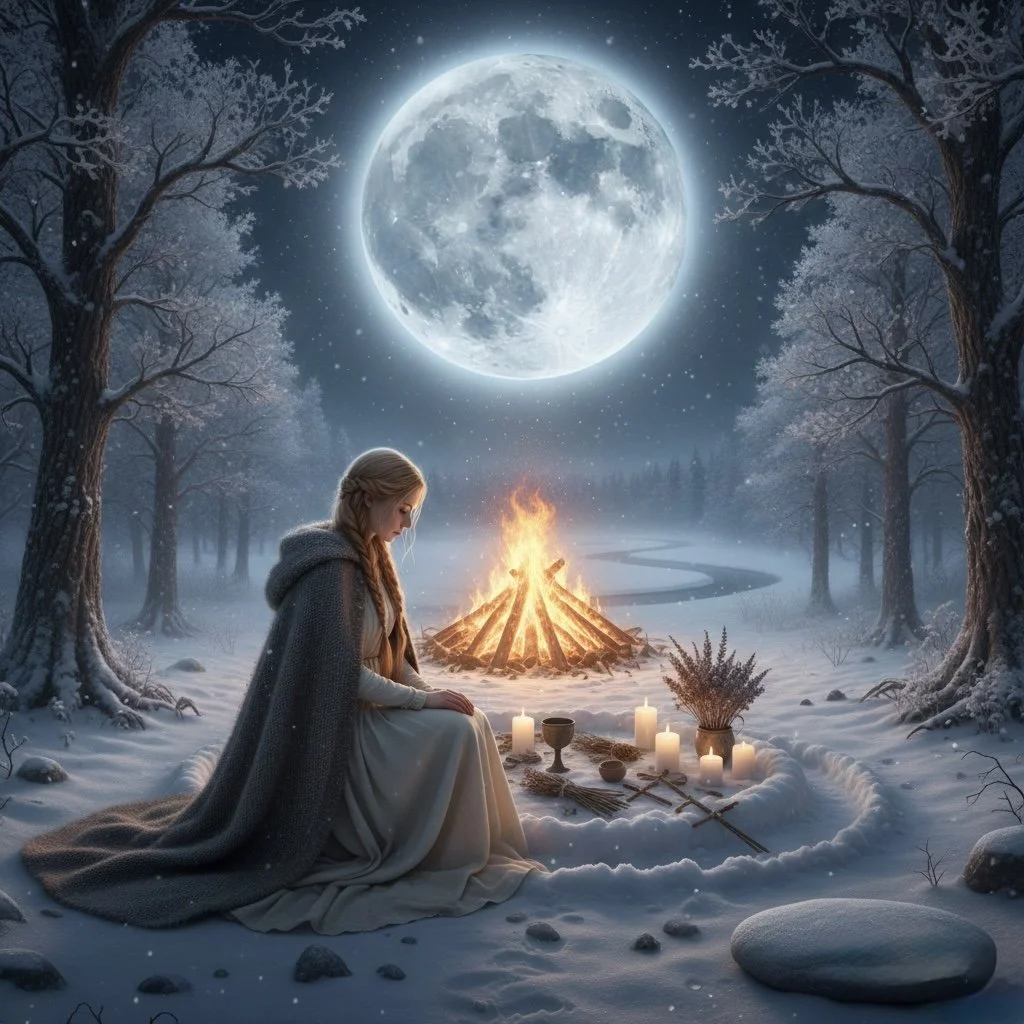
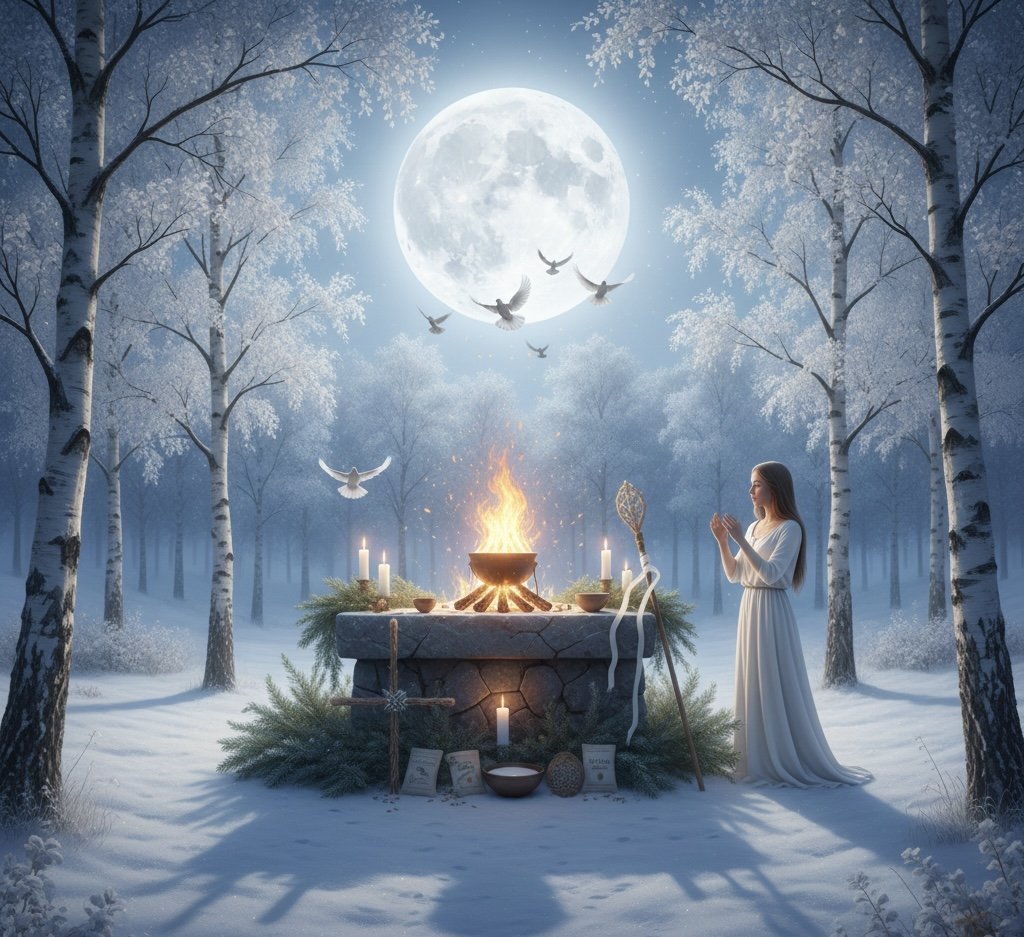
Fire played an essential role in Imbolc observances. Hearth fires were cleaned and rekindled, symbolizing purification and protection for the household. Candles and lamps were lit to honor the returning sun and to invite warmth, clarity, and guidance into the coming season. This association with light is why Imbolc is sometimes referred to as a festival of candles, a theme later echoed in Christian Candlemas traditions. Even today, many Imbolc rituals involve lighting candles as acts of intention rather than celebration, quiet affirmations of hope rather than exuberant joy.
Another deeply important aspect of Imbolc is its connection to the home and inner life. Unlike harvest festivals or summer rites that focus on community abundance, Imbolc turns inward. Homes were cleaned not just practically but spiritually. Floors were swept, hearths tended, and thresholds marked for protection. Brigid’s crosses or dolls were traditionally made from straw or reeds and placed in homes or barns to bless the household and livestock. These acts reinforced the belief that care given during this liminal moment would shape the months ahead.
Imbolc also holds a powerful symbolic role in spiritual and magical traditions. It is a time for setting intentions, not with urgency, but with patience. Seeds are chosen but not yet planted. Plans are imagined but not yet executed. The energy of Imbolc is subtle and steady, encouraging trust in gradual growth. It teaches that transformation does not begin with dramatic change but with quiet commitment and faith in cycles larger than ourselves.
Through centuries of cultural shifts, religious blending, and modernization, Imbolc has endured because its message remains deeply human. It speaks to the experience of waiting through hardship, of believing in renewal before it can be seen, and of tending small flames when the world still feels cold. Imbolc reminds us that life does not return all at once. It arrives gently, breath by breath, light by light, asking us to notice, to nurture, and to hope.