

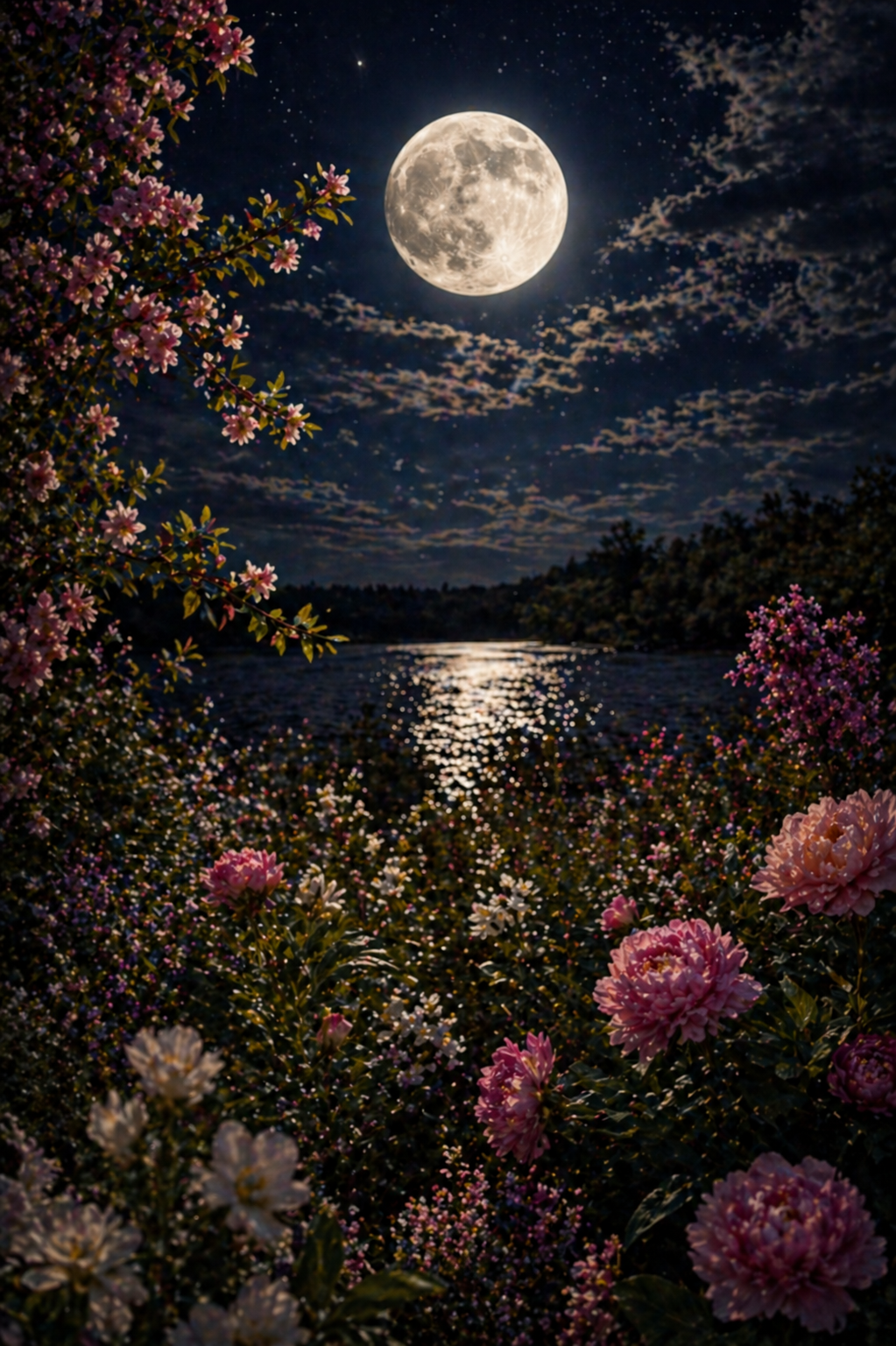
Flower Moon
The Flower Moon is the traditional name often given to the full moon in May. It is most commonly connected to the visible abundance of blooming plants during this time of year. As spring deepens and the earth becomes fuller, greener, and more alive, this moon came to reflect the season’s richness, beauty, and growth.
The name Flower Moon is widely associated with seasonal moon naming traditions that were used to describe what was happening in the natural world. Many of these names became popular through printed almanacs and were tied to observations of weather, plant life, animal behavior, and agricultural timing. The Flower Moon is one of the most recognized of these names because it is simple and easy to connect to what May often looks like in many places.
In common use, the Flower Moon is usually understood as a moon of blooming, beauty, growth, and fullness. People often associate it with gardens, fertility, creativity, emotional openness, and visible progress. Because it arrives during a time when so much is actively growing, it is often seen as a reminder to notice what has taken root and what is now beginning to show itself more clearly.
Historically, full moon names helped people stay connected to the rhythms of the year. Before modern calendars shaped daily life the way they do now, people paid much closer attention to seasonal signs. The full moons were not only beautiful events in the sky. They were also markers of time. They helped reflect the movement of the land, the progress of planting and harvest cycles, and the practical changes happening in the world around them.
The Flower Moon is often linked to abundance, but that abundance is not only about material things. It can also be understood as emotional fullness, spiritual growth, creative expression, and the visible results of care and patience. This is one reason the Flower Moon is often used in modern spiritual practice as a time for gratitude, reflection, celebration, and honoring what is beginning to blossom in life.
A lot of people know the Flower Moon simply as a pretty spring moon, but there is a deeper seasonal truth beneath the name. Flowers do not bloom by accident. They are the result of a longer process. Seeds were planted, roots formed, light returned, rain fell, and the season changed slowly over time. In that way, the Flower Moon can remind us that what is visible now often began quietly long before anyone else could see it.
Traditionally, this moon also falls during an important stretch of the year for agriculture and land based living. In many places, May was a time of active planting, tending, and watching the health of crops and the land. So while the Flower Moon sounds soft and decorative, it also points to a serious relationship with survival, timing, observation, and seasonal work. Beauty and necessity were often closely connected.
In modern spiritual and folk practice, the Flower Moon is often honored with flower offerings, moon water, gratitude rituals, altar refreshes, garden blessings, journaling, and intention work. Many people use it as a time to reflect on what is growing in their life and what needs more care. It can also be a beautiful moon for devotional work, creative rituals, self worth practices, and honoring joy without guilt.
One unique thing to understand about the Flower Moon is that its meaning can shift depending on the sign the full moon is in. The seasonal name stays the same, but the astrological tone can change from year to year. That means the Flower Moon may always carry themes of growth and fullness, while the emotional or spiritual lesson can feel different depending on the sign involved. This is part of what makes it both seasonal and personal.
Another interesting detail is that flower symbolism itself has long been tied to communication, devotion, memory, love, grief, and spiritual offering. So the Flower Moon is not only about nature looking beautiful. It can also carry meaning around expression, message, and what is being offered from the heart. Flowers have long been used in ritual, celebration, mourning, romance, and prayer. That gives this moon a deeper feeling than its name might first suggest.
At its heart, the Flower Moon is about visible becoming. It reflects a time when life is no longer only preparing beneath the surface. It is beginning to show itself. It reminds us to notice what is blooming, what is maturing, and what we are being asked to tend with care. It teaches that growth can be beautiful, but it is also the result of attention, patience, and relationship with the season we are in.