

Beltane
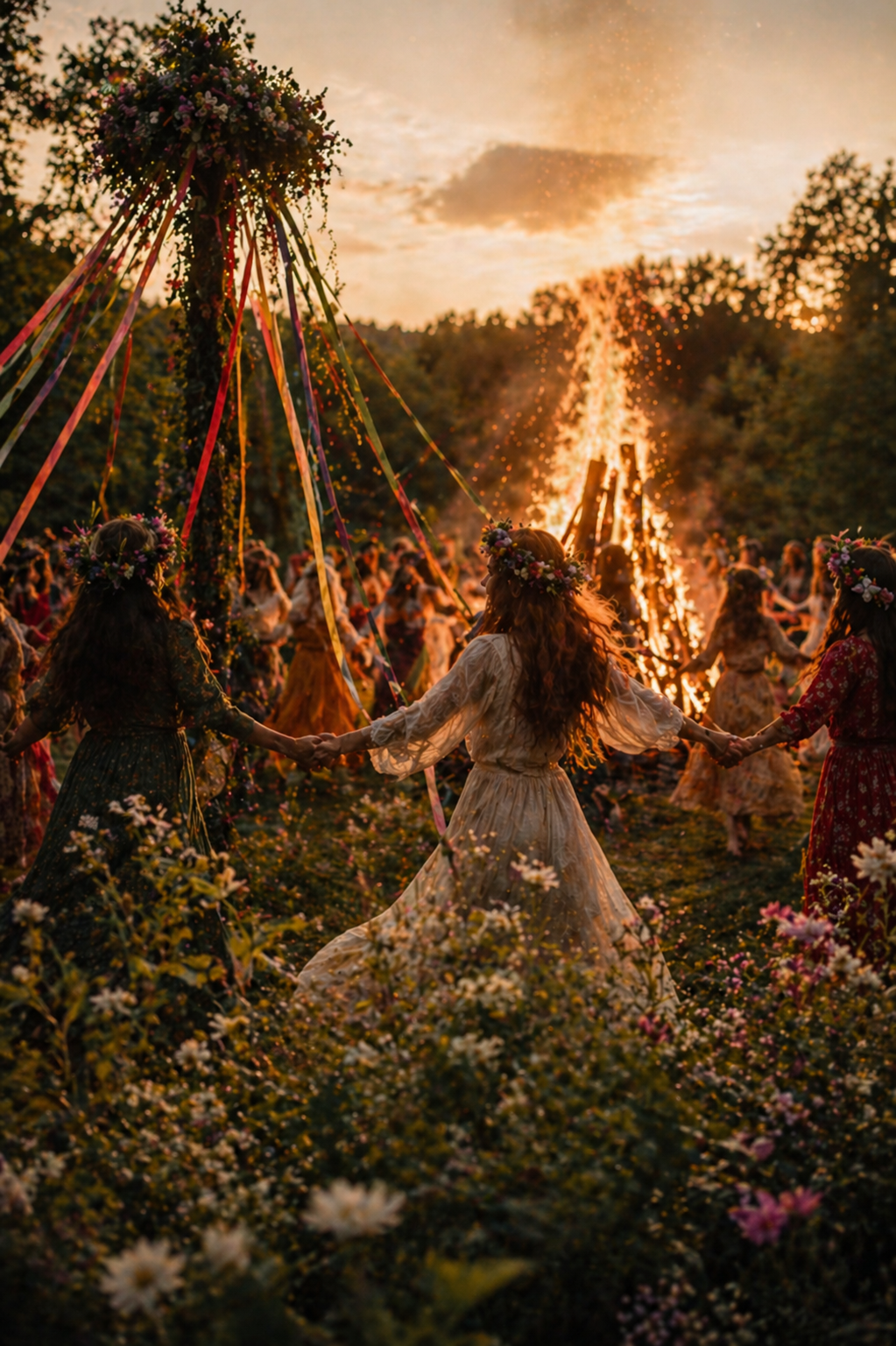
Beltane is a traditional seasonal festival celebrated on May 1st. It marks the halfway point between the spring equinox and the summer solstice. In older Celtic traditions, it was seen as the beginning of the bright half of the year. It is a time connected to warmth returning, fertility, growth, beauty, fire, and life becoming more visible again after winter.
Beltane has deep roots in ancient Celtic lands, especially in Ireland, Scotland, and the Isle of Man. It was one of the major seasonal festivals in the old Celtic calendar, alongside Samhain, Imbolc, and Lughnasadh. While today many people think of Beltane as simply a spring celebration, it originally carried strong meaning around protection, survival, livestock, crops, and the relationship between people and the land.
One of the most well known parts of Beltane is its connection to fire. Sacred fires were often lit on hills or in community spaces. These fires were not only symbolic. They were also used for blessing and protection. In some traditions, cattle were driven between two fires to protect them before being taken out to summer pasture. Fire at Beltane represented purification, life force, light, safety, and the power of the season turning.
Beltane is also strongly tied to fertility, but that word meant more than only human fertility. It included the fertility of the land, animals, crops, homes, ideas, and life itself. This is one reason Beltane is often associated with flowers, green branches, blossoming trees, dancing, ribbons, and acts of celebration. It is a festival of growth in every sense.
A lot of people know Beltane for modern symbols like the maypole, flower crowns, and bonfires. These are now some of the most recognized parts of the celebration. The maypole is often tied to themes of life force, union, movement, and seasonal joy. Flower crowns and blossoms reflect the beauty and fullness of spring. Bonfires continue to echo the older sacred fires that were central to the festival long ago.
Another important part of Beltane tradition is the belief that this was a thin and powerful time. In folk belief, the boundaries between worlds were more open around major seasonal festivals. Because of this, Beltane was not only joyful. It was also protective. Homes, animals, and people were often blessed or guarded in different ways. People used flowers, branches, herbs, smoke, dew, and charms to invite blessing and turn away harm.
One traditional custom connected to Beltane was the gathering of morning dew on May 1st. In some folk practices, Beltane dew was believed to carry beauty, blessing, and vitality. People sometimes washed their face in it for health, radiance, or good fortune. This is one of those smaller old customs that is easy to miss, but it gives a beautiful look into how closely people once watched the land and seasons.
Beltane was also connected to the home and hearth. Even though it is often imagined as an outdoor fire festival, it was also about protecting the household and blessing the season ahead. Doors, windows, barns, and thresholds could be decorated with flowers or green branches. In that way, Beltane was not only about celebration. It was also about inviting life, abundance, and protection into the spaces people depended on every day.
A more unique thing to understand about Beltane is that it was not just a festival of happiness. It came at a practical and important turning point in the year. For farming communities, this was a serious seasonal shift. Animals were moving, land was changing, and people were entering a new phase of work and risk. So while Beltane is beautiful and bright, it also carries the deeper feeling of crossing a threshold. It is about stepping into a season that must be tended carefully.
In modern spiritual practice, Beltane is often honored through candle rituals, bonfires, flower offerings, love and beauty workings, altar refreshes, devotional acts, seasonal meals, and time spent outdoors. Some people celebrate with music, dancing, or community gatherings. Others honor it more quietly through home blessings, intention setting, or rituals focused on creativity, healing, and growth.
At its heart, Beltane is about life becoming visible again. It reminds us to notice what is blooming, what wants our care, and what we are ready to bring to fuller expression. It is a season of warmth, devotion, vitality, and sacred movement. It teaches that growth is not passive. It asks to be honored, protected, and tended.